Floor tile services

Floor tile installation that stays flat, solid and easy to live with

Porcelain, ceramic, marble, natural stone, large-format or mosaic, in a kitchen, entryway, laundry room or bath. When a tile floor cracks or loosens, the cause is almost always underneath it, so the subfloor is the first thing we check.

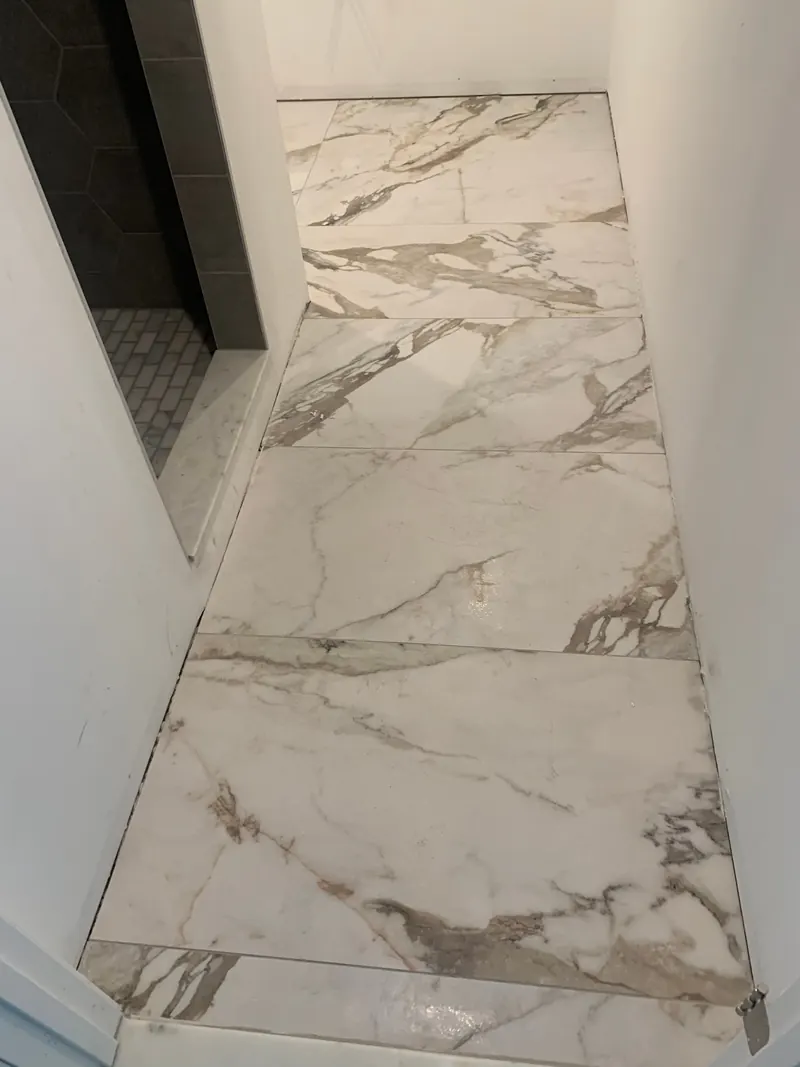
Large-format white marble-look porcelain floor tile with tight, consistent grout joints

Porcelain and ceramic floor tile

Porcelain floor tile installation

Porcelain is the workhorse of tile floors. It’s dense, absorbs almost no water and holds up to heavy traffic, so it suits kitchens, entryways and bathrooms. It’s also hard, which means it needs the right setting materials and a sharp wet saw for clean cuts.

Ceramic floor tile installation

Glazed ceramic costs less and is easier to cut, which makes it a sensible choice for lighter-traffic rooms like guest baths and laundry rooms. We’ll tell you honestly if your room calls for porcelain instead.

  • Stone-, marble-, concrete- and wood-look porcelain
  • Glazed ceramic in a wide range of colors and sizes
  • Grout colors chosen to blend in or stand out
  • Transition strips planned at every doorway
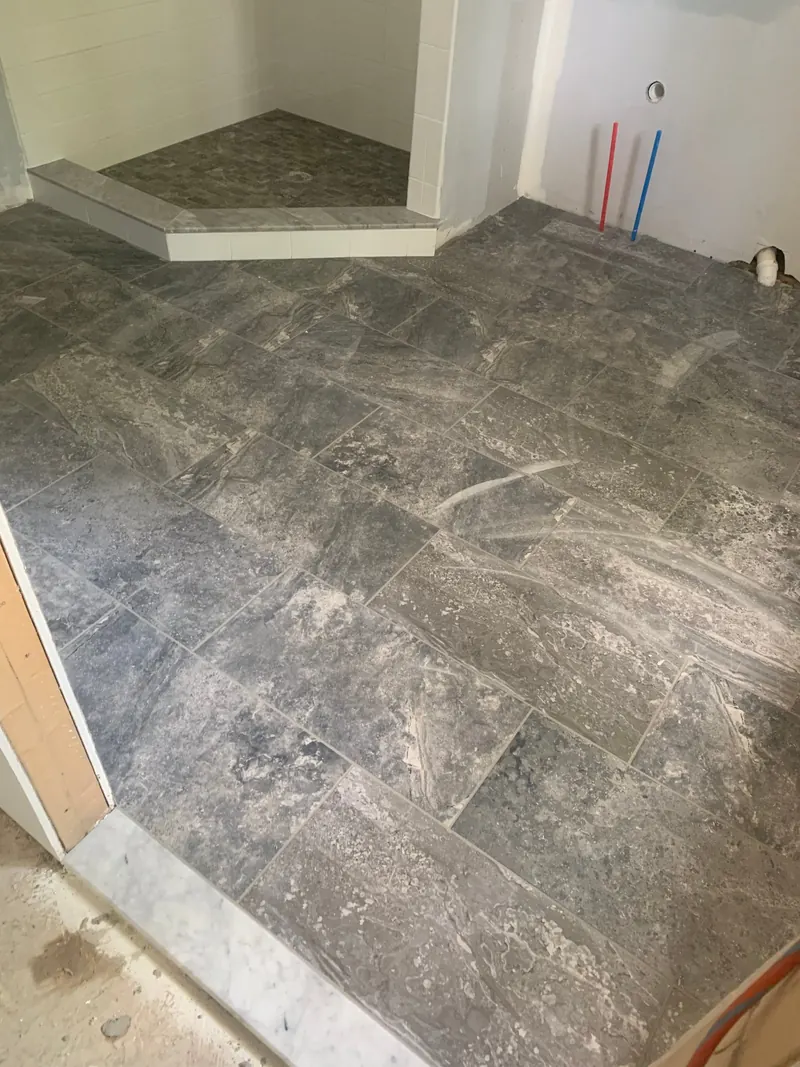
Dark gray stone-look porcelain floor tile laid in an offset pattern leading to a tiled shower curb
Gray stone-look porcelain floor tile in an offset layout.

Large format tile installation

Large-format tile makes a room look bigger and leaves fewer grout lines to clean. The trade-off is that big tiles show every high and low spot in the floor, and any edge that sits higher than its neighbor catches the light.

We check the floor for flatness, correct it where needed and set each tile with a leveling system. You can see the clips in our in-progress photos. The result is a smooth, flat surface with tight, consistent joints.

  • Tiles 24 inches and larger, including long planks
  • Floor flatness checked and corrected before setting
  • Leveling system to keep edges flush
  • Full mortar coverage under each tile
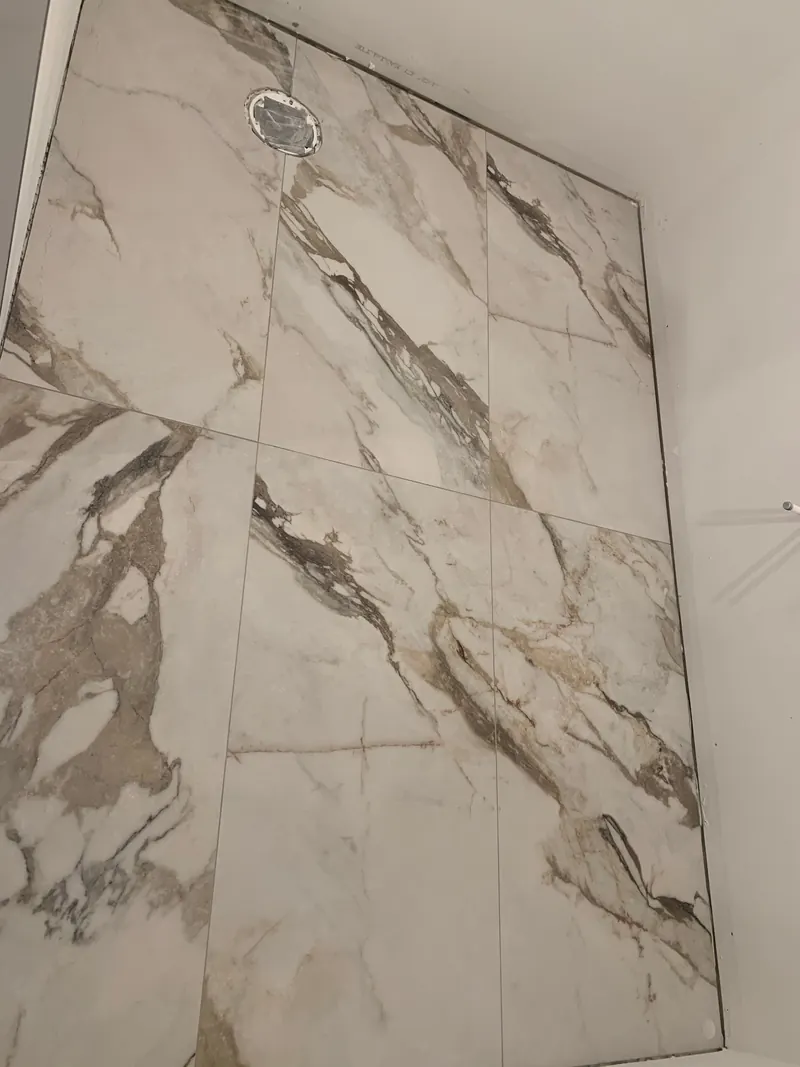
Large-format marble-look porcelain tile with bold veining laid with tight grout lines
Large-format marble-look porcelain with tight grout lines.

Marble and natural stone flooring

Marble tile installation

Marble is beautiful but less forgiving than porcelain. Light-colored marble can stain from the wrong mortar, and polished surfaces show scratches. We’ll talk through polished versus honed finishes, and sealing, so you know what to expect from the floor over time.

Natural stone flooring

Natural stone varies from tile to tile in color, veining and sometimes thickness. We lay tiles out and blend them before setting so the floor looks balanced instead of patchy. Prefer the look with less maintenance? Marble-look porcelain, like the floor shown at the top of this page, is a good alternative.

  • Marble, granite, travertine, slate and limestone tile
  • Tiles sorted for color and thickness before setting
  • Setting materials suited to the stone
  • Sealing and care guidance after installation
Illustration: offset layout, a common choice for stone floors.

Mosaic floor installation

Mosaic floors have many grout joints, which gives them excellent grip underfoot. That’s why they’re the standard for shower floors and a favorite for small bathrooms and decorative inlays.

The skill is in hiding the sheets. Each sheet is set and adjusted so the spacing between sheets matches the spacing within them, and the pattern flows across the floor with no visible grid.

  • Pebble, penny, hexagon and basketweave mosaics
  • Seamless joins between mesh-mounted sheets
  • Mosaic shower floors sloped to the drain
  • Inlays and borders within larger floor tile
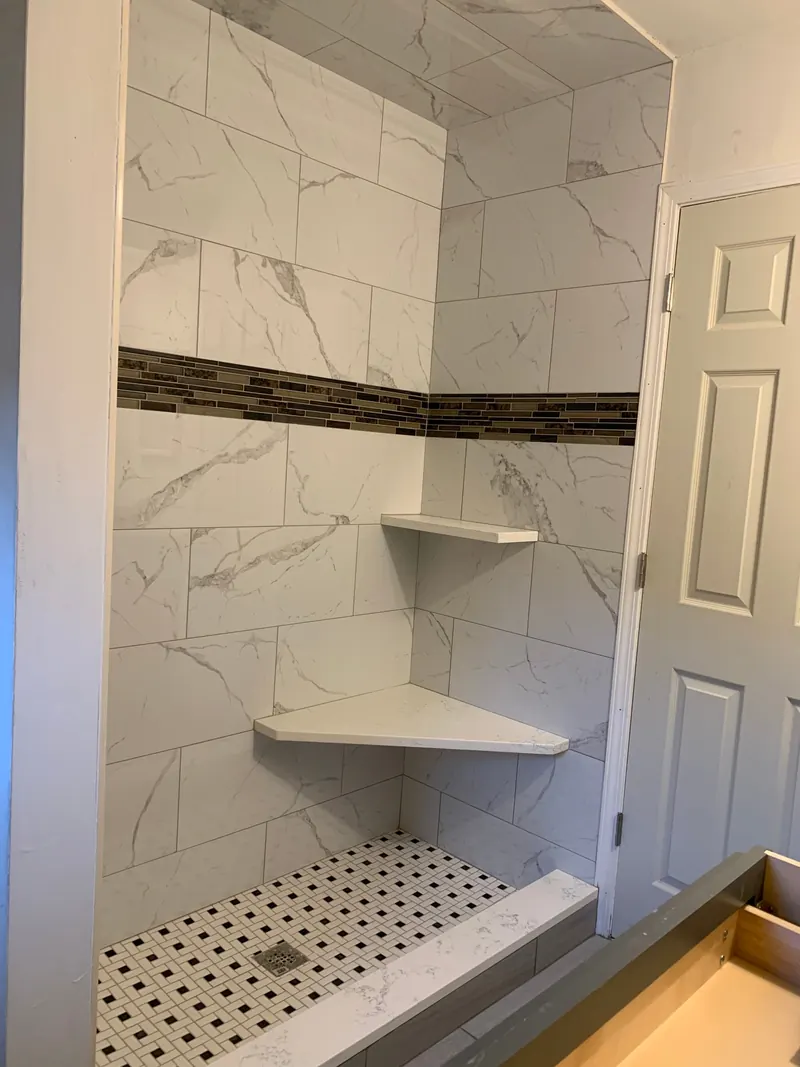
Marble-look porcelain shower with a dark glass mosaic accent band, corner shelves and a black-and-white basketweave floor
Black-and-white basketweave mosaic floor in a marble-look shower.

Room by room

Floor tile for every room in the house

Each room puts different demands on a floor, so the tile and layout should match.

  • Entryway and foyer tile installation

    Entryways take the worst of a Michigan winter: snow, road salt and wet boots. Porcelain with a textured finish and a darker grout handles it well. We plan the layout from the front door, which is where the floor makes its first impression.

  • Laundry room floor tiling

    Laundry rooms and mudrooms need a floor that won’t mind a leak or a wet dog. Tile runs under the washer and dryer space, around any floor drain, and transitions cleanly into the hallway.

  • Kitchen floors

    Durable, easy-to-clean floor tile planned around cabinets and islands. See our kitchen tile page for details.

  • Bathroom floors

    Floors that handle water and daily use, matched to the shower and walls. Learn more about bathroom floor tiling.

Radiant heat

Heated floor tile installation

Tile holds warmth well, which makes it a great match for radiant floor heating, especially in basements, kitchens and mudrooms built over cold slabs.

The heating element is installed on the prepared floor and embedded before the tile is set, so it has to be part of the plan from the start. Power and thermostat connections need an electrician, so tell us in your request whether one is already involved.

  • Any tiled room

    Heated floors aren’t only for bathrooms. Kitchens, entryways and finished basements benefit too.
  • Coverage where you walk

    Heat is planned for open floor areas, not under cabinets, islands or appliances.
  • Sequenced with your project

    We confirm the heated area and the electrical steps in your estimate, before any tile work begins.

Layouts & patterns

Floor tile patterns, from simple to custom

The layout changes how a floor looks as much as the tile does. Here are a few common options.

  • Offset

    Rows shifted by a third or half a tile. With long tiles, a one-third offset reduces visible lippage.

  • Large-format grid

    Big tiles with narrow joints, so the floor looks calm and continuous and is easier to clean.

  • Herringbone

    Plank or rectangular tile in a zig-zag. It adds movement to hallways, foyers and open rooms.

  • Basketweave

    Alternating pairs that suit traditional baths, inlaid rugs and borders.

Chevron tile installation

Chevron looks like herringbone, but the tile ends are cut at an angle so they meet in a clean point. The cuts are less forgiving, and the centerline has to run straight down the room. It works well in hallways and long, narrow spaces.

Custom tile patterns

Borders, inlaid “rugs”, mixed sizes or two-color layouts. We draw custom patterns out against your room’s actual dimensions before installation, so the design lands evenly at the walls and doorways.

Preparation

What’s under your floor tile matters most

Cracked tiles and loose grout usually start below the surface. Here’s what we check.

  • A solid subfloor

    A floor that bounces or flexes will crack tile and grout over time, so we look for movement before we start.
  • A flat surface

    Dips and humps are corrected first, which matters most under large-format tile.
  • Room to move

    Gaps at the walls and transitions let the floor expand and contract with the seasons.
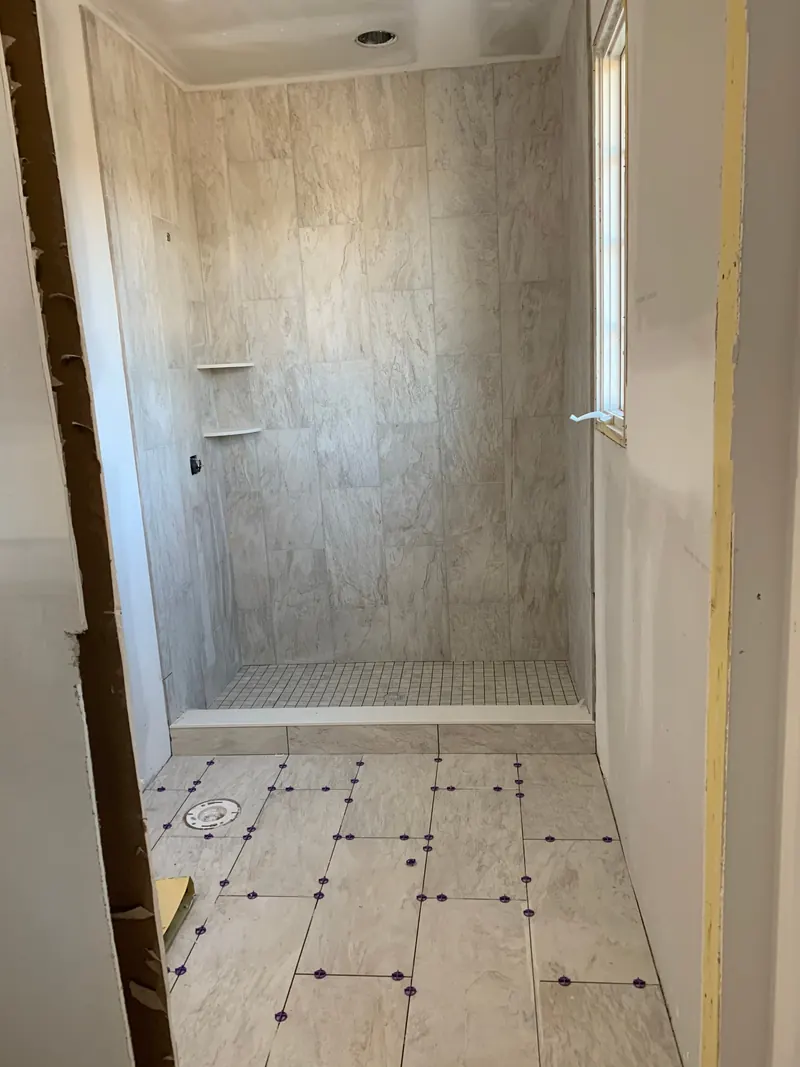
Work in progress: stone-look shower walls with bathroom floor tile set using leveling clips for a flat surface
In progress: floor tile set with leveling clips before grouting.

Service area

Floor tile installation throughout Metro Detroit

Metro Detroit has everything from post-war homes in Warren and Royal Oak to newer construction in Shelby Township and Rochester Hills. Older floors often need more leveling or reinforcement than they appear to, so we look at the floor itself before we quote the job.

We install floor tile across Macomb County, including Sterling Heights and Clinton Township, and in Troy, Birmingham and Bloomfield Hills. Tell us the room, the approximate size and the tile you’re considering.

Areas we serve in Metro Detroit

  • Macomb County
  • Sterling Heights
  • Clinton Township
  • Shelby Township
  • Troy
  • Rochester Hills
  • Warren
  • Royal Oak
  • Birmingham
  • Bloomfield Hills

Not on the list? Contact us to check whether your location is in our service area.

Floor tile questions

Porcelain or ceramic: which is better for my floor?

Porcelain is denser and more durable, so it’s the better pick for kitchens, entryways and other busy floors. Ceramic is fine for lighter-traffic rooms and usually costs less. If you’re unsure, we can recommend one for your room.

Can tile go over my existing floor?

Tile can’t go over vinyl, carpet or floating floors. Over existing tile it’s sometimes possible, but it raises the floor height. We’ll look at what’s there and recommend the right preparation.

Do large tiles need a perfectly flat floor?

Yes. The bigger the tile, the flatter the floor needs to be. We check flatness before starting and correct high and low spots so the tile edges stay flush.

How long until I can walk on a new tile floor?

It depends on the setting materials and grout used. We’ll tell you when the floor can take light foot traffic and when furniture and appliances can go back.

Free estimates

Planning a new tile floor?

Tell us what you have in mind — the room, the tile you like, your timeline. We’ll follow up to discuss the details and set up a free estimate.